
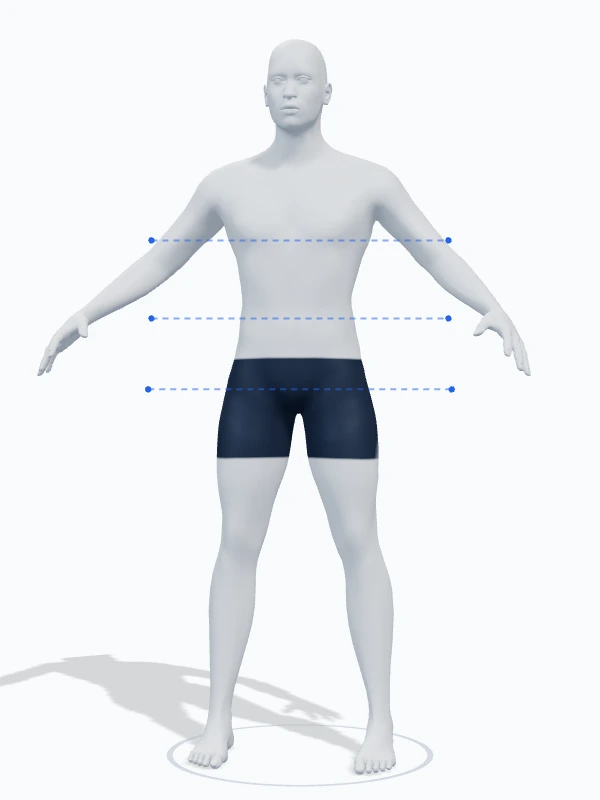
 Classic Tailored
Trapezoid (Athletic V)
SWR 1.32 – 1.45 · Balanced Taper
Broad chest and deltoids taper neatly into a trim waist and proportional hips—ideal for tailored menswear.
Best tailoring: Unstructured blazers, knit polos, tapered chinos
Preview realistic men’s silhouettes with our male body shape visualizer from shoulder width, chest, waist, height, weight, and age—connected to our main Body Shape Visualizer suite.
Refines predicted body fat % (teen & adult Deurenberg model)
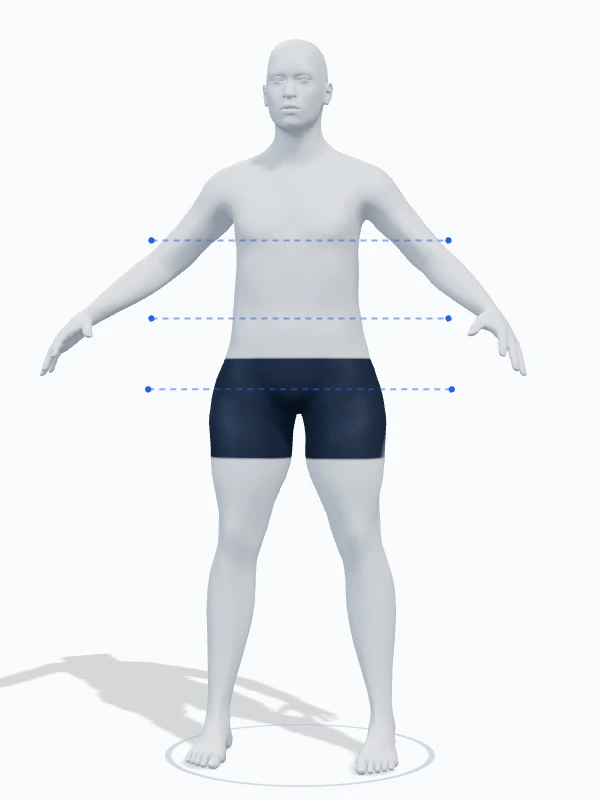
Across outer deltoid points, arms relaxed at sides
Fullest chest/bust line, tape level with floor
Narrowest torso crease above navel on relaxed exhale
Widest point across hips and glutes, feet together
Classic broad shoulders & chest tapering cleanly to a trim waist
Your shoulder-to-waist ratio sits in the balanced athletic range (1.32–1.46), widely regarded as the most balanced frame for off-the-rack tailoring.
Calculated live from your height, weight, and body measurements.
Choose structured, clean-draping cuts that follow your natural taper without skin-tight pull.
Tailored crewnecks, knit polos, unstructured blazers, and crisp Oxford shirts. · Athletic-tapered chinos, straight-slim denim, and pleated wool trousers.
Overly boxy shirts that erase your waist taper.
Preserve balanced upper-lower strength and keep midsection lean.
Inspect shoulder-to-waist geometry across Trapezoid, Inverted Triangle, Rectangle, Oval, and Triangle builds—click any card to load it directly into the male body shape visualizer.
Classic TailoredSWR 1.32 – 1.45 · Balanced Taper
Broad chest and deltoids taper neatly into a trim waist and proportional hips—ideal for tailored menswear.
Best tailoring: Unstructured blazers, knit polos, tapered chinos
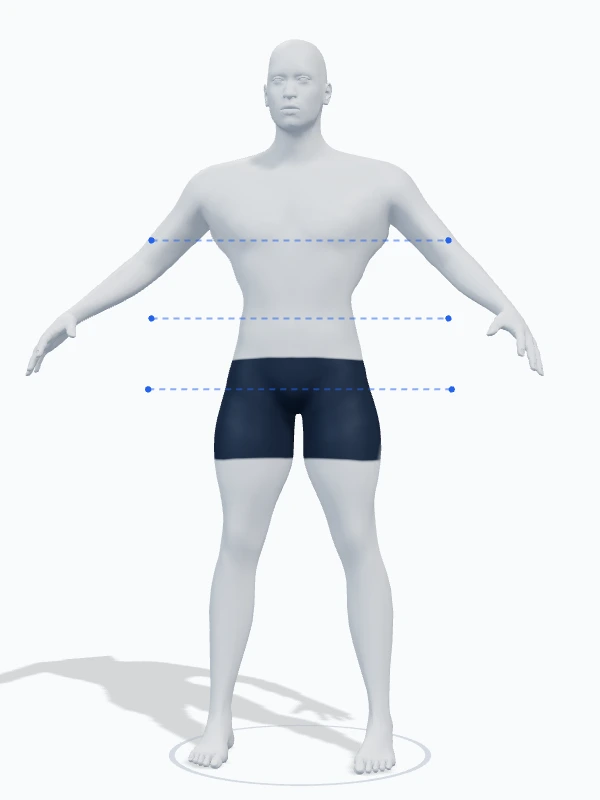 Golden V-Taper
SWR ≥ 1.46 · Pronounced V-Line
Wide shoulder caps and broad lats sweep down sharply into a narrow waist and athletic lower frame.
Best tailoring: Straight denim, darted shirts, raglan tees
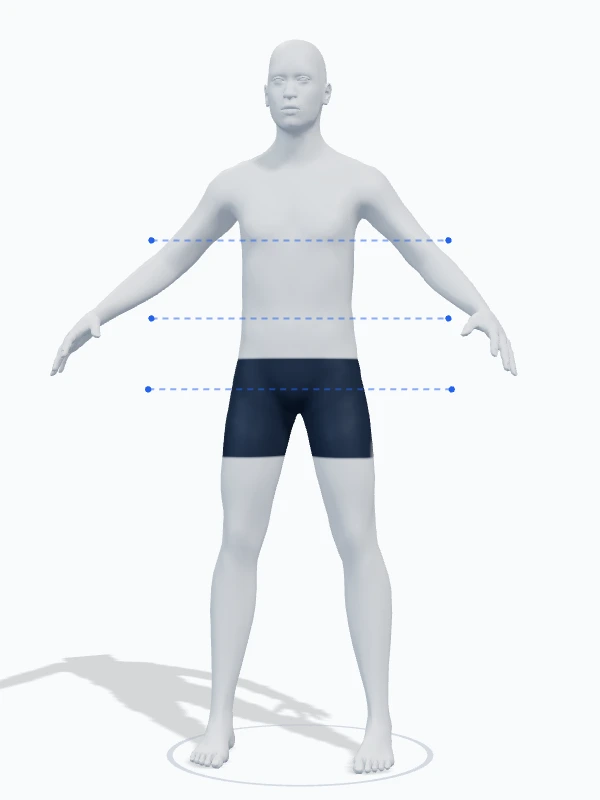 Linear Frame
SWR 1.22 – 1.31 · Parallel Torso
Shoulders, chest, and hips track closely in uniform width, common among distance runners and tall frames.
Best tailoring: Structured overshirts, textured knits, jackets
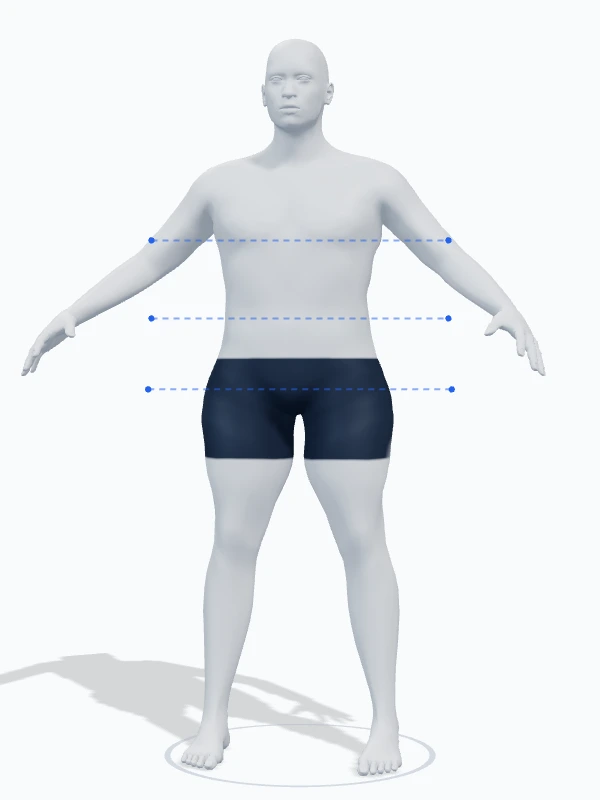 Midsection Rounded
WHtR ≥ 0.54 or Waist ≥ Chest - 3
Midsection carries more central depth relative to shoulders and lower limbs, softening the torso line.
Best tailoring: Vertical dark layers, structured blazers, V-necks
 Lower Dominant
Hips > Chest + 3 cm · SWR < 1.22
Lower torso and hips sit slightly wider than shoulder breadth, elevating the value of structured upper layers.
Best tailoring: Collared jackets, lighter tops, dark trousers
Men’s visual symmetry and jacket fit hinge on upper-frame breadth relative to waistline width—quantified cleanly by the Shoulder-to-Waist Ratio (SWR). A specialized male body shape visualizer combines shoulder breadth, chest fullness, natural waist girth, and hip balance into one anatomical sculpture instead of flattening men into BMI alone.
Trimming 5 cm from the waist while adding 3 cm across lateral delts and upper back transforms a silhouette visibly from Rectangle toward classic Trapezoid or Inverted Triangle proportions. Athletes comparing cutting phases against lean mass targets can orbit front, three-quarter, side, and back angles smoothly inside the male body shape visualizer.
Two men standing 178 cm at 78 kg can show completely different profiles depending on predicted body fat % and frame structure. Use our male body shape visualizer alongside these anatomical benchmarks to visualize how dropping midsection depth sharpens shoulder dominance:
Defined deltoid separation, narrow waistline (WHtR 0.42–0.45), and crisp Inverted Triangle or Trapezoid lines.
Balanced upper chest contour and athletic waist drop (SWR 1.32–1.44); tailored shirts drape cleanly without pulling.
Softer abdominal line with solid frame volume while keeping upright shoulders and comfortable everyday movement.
Midsection fullness surpasses chest taper (WHtR > 0.53); toggle Compare Goal in this male body shape visualizer to preview -5 kg shifts.
Traditional menswear sizing assumes a standard 6-inch (15 cm) "drop" between chest girth and trouser waist. When shoulder width outpaces waist size significantly in the male body shape visualizer—common in Trapezoid and Inverted Triangle men—off-the-rack shirts billow at the lower back unless fitted darts or athletic-tapered cuts are selected.
Meanwhile, pairing tape tracking in the male body shape visualizer with predictable resistance progressions ensures weight changes come from target muscle zones rather than unwanted midsection gain.
It combines height, weight, and age with shoulder width, chest girth, natural waist, hips, and thighs. Dividing shoulder circumference by natural waist calculates Shoulder-to-Waist Ratio (SWR) and drives realistic upper-torso tapering across the male frame.
Our men’s frame analyzer identifies Trapezoid (Athletic V), Inverted Triangle, Rectangle (Straight), Oval (Central Build), and Triangle silhouettes, pairing each match confidence score with tailored shirt, jacket drop, and training guidance.
A classic Trapezoid build spans an SWR of 1.32 to 1.45, whereas 1.46 to 1.618 represents the pronounced V-taper Inverted Triangle associated with swimmers and physique athletes. Trimming waist centimeters or building deltoid and lat width pushes SWR steadily higher inside this male body shape visualizer.
Yes. Skeletal muscle is considerably denser than body fat, so an 80 kg lifter at 13% body fat holds broad shoulders, a deep ribcage, and a narrow midsection compared to an 80 kg sedentary build at 25% body fat. Adjust waist and chest sliders together to preview lean recomposition clearly.
Most users do not own a DEXA report, so our biometric engine predicts body fat % automatically from height, weight, age, waist circumference, and gender using a blended Relative Fat Mass (RFM) and Deurenberg formula. Known scan values can still be entered under More Measurements.
Yes. Toggle effortlessly between metric (cm / kg) and imperial (ft·in / lbs) controls in the top panel without resetting locked measurements or Goal comparisons.